Jump to content

San Remo: Difference between revisions

From escforumwiki
No edit summary
Santos (talk | contribs)
No edit summary
 
(66 intermediate revisions by 2 users not shown)
Line 1: Line 1:
{{Infobox country
{{Infobox country
|native_name                = República de San Remo <small>([[Wikipedia:Spanish_language|Spanish]])</small> <br> República de Sanremo <small>([[Wikipedia:Portuguese_language|Portuguese]])</small>
|native_name                =  
|conventional_long_name      = Republic of San Remo
|conventional_long_name      = San Remo
|common_name                = San Remo
|common_name                = San Remo
|image_flag                  = Flag of San Remo.png
|image_flag                  = Flag of San Remo.png
|image_coat                  = Coat of arms of San Remo.png
|image_coat                  = Coat of arms of San Remo.png
|symbol_type                = Coat of arms
|symbol_type                = Coat of arms
|national_motto              = "Deus lo vult" (Latin) <br><small>''God wants it''</small>  
|national_motto              = "Deus lo vult" ([[Wikipedia:Latin_language|Latin]])<br><small>''God wants it''</small>  
|national_anthem            =
|national_anthem            =
|image_map                  = San Remo map.png
|image_map                  = Location San Remo.png
|map_caption                = Location of San Remo
|image_map2                  = Archipelago San Remo.png
|capital                    = Rhea
|map_caption                = Location of '''San Remo''' (orange)
|map_caption2                = '''San Remo''' (orange)
|capital                    = [[Rhea]]
|largest_city = capital
|largest_city = capital
|official_languages          = [[Wikipedia:Spanish_language|Spanish]], [[Wikipedia:Portuguese_language|Portuguese]], [[Wikipedia:Latin|Latin]]
|official_languages          = [[Romi]], [[Tikatan]]
|national_languages          =  
|national_languages          =  
|demonym                    = San Remano/a
|demonym                    = San Reman
|government_type            = [[Wikipedia:Unitary_state|Unitary]] [[Wikipedia:Presidential_system|presidential]] [[Wikipedia:Constitutional_republic|constitutional republic]]
|government_type            = [[Wikipedia:Unitary_state|Unitary]] [[Wikipedia:Parliamentary_system|parliamentary]] [[Wikipedia:Constitutional_monarchy|constitutional monarchy]]
|leader_title1              = President
|leader_title1              = Monarch
|leader_name1                = Juan García Aragón
|leader_name1                = [[Michael_II_of_Tikata|Michael II]]
|leader_title2              = Vice President
|leader_title2              = Governor-General
|leader_name2                = Horacio Domingo Elizondo
|leader_name2                = Horacio Domingo Elizondo
|leader_title3              = Prime Minister
|leader_name3                = Juan García Aragón
|sovereignty_type            =  
|sovereignty_type            =  
|established_event1          = Independence from [[Wikipedia:Spain|Spain]]
|established_event1          =  
|established_date1          = 19 February 1785
|established_date1          =  
|established_event2          = Republic
|established_event2          =  
|established_date2          = 5 July 1889
|established_date2          =  
|established_event3          =
|established_event3          =  
|established_date3          =
|established_date3          =  
|established_event4          =
|established_event4          =
|established_date4          =
|established_date4          =
Line 32: Line 36:
|established_date9          =
|established_date9          =
|area                        = <!-- major area size (in [[Template:convert]] either km2 or sqmi first) -->
|area                        = <!-- major area size (in [[Template:convert]] either km2 or sqmi first) -->
|area_km2                    = <!-- major area size (in square km) --> 111296
|area_km2                    = 495807
|area_sq_mi                  = <!-- area in square mi (requires area_km2) -->
|area_sq_mi                  = <!-- area in square mi (requires area_km2) -->
|population_estimate        = 10,267,340
|area_label                  = Total
|population_estimate        = 50,371,809
|population_estimate_rank    =
|population_estimate_rank    =
|population_estimate_year    = 2013
|population_estimate_year    = 2014
|population_census          =  
|population_census          =  
|population_census_year      =  
|population_census_year      =  
|population_density_km2      = 92.3
|population_density_km2      = 101.60
|population_density_sq_mi    =  
|population_density_sq_mi    =
|GDP_PPP                    =  
|GDP_PPP                    =  
|GDP_PPP_rank                =  
|GDP_PPP_rank                =  
Line 54: Line 59:
|HDI_year                    =  
|HDI_year                    =  
|HDI_category                =  
|HDI_category                =  
|currency                    = Peso
|currency                    = [[Aleta]]
|currency_code              = COP
|currency_code              = SRA
|time_zone                  =  
|time_zone                  =  
|utc_offset                  =  
|utc_offset                  =  
|time_zone_DST              =  
|time_zone_DST              =  
|utc_offset_DST              =  
|utc_offset_DST              =  
|broadcaster                = RTVR (Radio y Televisión San Remano)
|broadcaster                = FRS (Fundación de Radiodifusión San Remana)
|date_format                = DD/MM/YYYY
|date_format                = DD/MM/YYYY
|drives_on                  = Right
|drives_on                  = Right
|cctld                      = .sr
|cctld                      = .sr
|calling_code                =  
|calling_code                = 345
|}}
|}}


San Remo, officially the '''Republic of San Remo''', is a sovereign state, located on the northern continent of Internatia. The capital is Rhea, the largest city of the country by both land area and population. San Remo is bordered by [[Sockistan]] to the northwest, [[Anselmsuusonia]] to the east, [[Kosma]] to the southeast and by the sea to the north and the southwest.<br>
'''San Remo''' ([[Romi]]: ''Sanremo'', [[Tikatan]]: ''Sant'xa Remarz'') is an [[Wikipedia:Island_country|island country]]. The country geographically comprises two main landmasses and several smaller islands.


== History ==
San Remo gained independence from the [[Tikata|Kingdom of Tikata]] in 1814. A new [[Wikipedia:Constitution|constitution]] was adopted on 6 January 1815. The western part of Carbalia, the second largest island of San Remo, has been under the ''[[Wikipedia:De_facto|de facto]]'' control of the breakaway government of [[Colinestria]] since 1 September 2013.


===Pre-San Remo===
Nationally, legislative authority is vested in an elected, unicameral parliament, while executive political power is exercised by the cabinet, led by the [[Wikipedia:Prime_minister|Prime Minister]], who is currently Juan García Aragón. King [[Michael_II_of_Tikata|Michael II]] is the country's head of state and is represented by a [[Wikipedia:Governor-General|Governor-General]]. In addition, San Remo is organised into 15 regional councils and 67 provinces for local government purposes. San Remo is a member of the [[Commonwealth of Nations]].
 
San Remo was already inhabited in 10,000 BC. It was a part of the [[Wikipedia:Roman_Empire|Roman Empire]] during the [[Wikipedia:Ancient_Rome|ancient Roman civilization]] and it existed of different kingdoms during the [[Wikipedia:Middle_Ages|Middle Ages]]. An important city was San Remo, founded on [[Wikipedia:August_13|13 August]] [[Wikipedia:489|489]] and named after [[Wikipedia:St._Remigius|St. Remigius]].
 
[[File:Kingdom of Portugal.png|thumb|left|150px|Flag of San Remo as a part of the [[Wikipedia:Kingdom_of_Portugal|Kingdom of Portugal and the Algarves]] (1336-1585). ]]
 
===Portuguese domination===
 
The history of modern San Remo started when king [[Wikipedia:Afonso_IV_of_Portugal|Afonso IV of Portugal]] encouraged maritime commerce and ordered the first explorations. San Remo, that existed of different kingdoms in the [[Wikipedia:14th_century|14th century]], was conquered by the Portuguese in [[Wikipedia:1336|1336]]. The kingdoms were formed into one territory and joined the [[Wikipedia:Kingdom_of_Portugal|Kingdom of Portugal and the Algarves]] ([[Wikipedia:Portuguese_language|Portuguese]]: ''Reino de Portugal e dos Algarves'') on [[Wikipedia:April_25|25 April]] [[Wikipedia:1336|1336]]. The territory was named Overseas Province of San Remo ([[Wikipedia:Portuguese_language|Portuguese]]: ''Província Ultramarina de Sanremo''), after the city of San Remo. The city of San Remo became the capital of the territory.
 
[[File:Kingdom of Aragón.png|thumb|left|150px|Flag of the Kingdom of Aragón (1505-1598). ]]
 
===Reino de Aragón===
 
The Overseas Province of San Remo had problems in the late [[Wikipedia:15th_century|15th century]] when movements in the south of the territory wanted independence. In [[Wikipedia:1498|1498]] the southern departments (the current Astralia and Amadora) of San Remo claimed independence. The leader of the rebel movements, Sancho Bernardo, proclaimed himself Sovereign Prince of Aragón ([[Wikipedia:Portuguese_language|Portuguese]]: ''Príncipe Soberano de Aragón''). On [[Wikipedia:December_10|10 December]] [[Wikipedia:1505|1505]] the [[Wikipedia:Portuguese_crown|Portuguese crown]] recognized the independence and raised the status of Aragón to a kingdom on the condition that Portuguese would remain the official language. Sancho Bernardo became King Sancho I of the Kingdom of Aragón ([[Wikipedia:Portuguese_language|Portuguese]]: ''Reino de Aragón''). The city of San Remo became the capital of the Kingdom of Aragón. Vila Nova, a city that became more important for the Portuguese colonists during the 15th century, became the new capital of the Overseas Province of San Remo, that, although it didn't include the city of San Remo anymore, kept its name.
 
[[File:Flag of Cross of Burgundy.svg.png|thumb|left|150px|Flag of the Viceroyalty of León as a Spanish overseas territory (1580-1785). ]]
 
===Spanish domination===
 
The relations between the Kingdom of Aragón and the Overseas Province of San Remo were good. The political situation was stable, until [[Wikipedia:1580|1580]]. On [[Wikipedia:May_30|30 May]] [[Wikipedia:1580|1580]] the eastern departments of the Overseas Province of San Remo (the current departments Sonia, Castilla, Magdalena, Penedés, Caracas and León) were conquered by the [[Wikipedia:Spanish_crown|Spanish crown]]. Rhea became the capital of the Viceroyalty of León ([[Wikipedia:Spanish_language|Spanish]]: ''Virreinato de León''), the newly formed Spanish colonial jurisdiction, and the official language became Spanish. In [[Wikipedia:1582|1582]] the northern departments (the current Montoyá and Boyacá) joined the Viceroyalty of León, giving it full access to the northcoast.
 
The Overseas Province of San Remo, that existed of the current departments Montana, Almeida and Gondomar after [[Wikipedia:1582|1582]], lost access to the sea, which led to political instability and economic stagnation. The last parts of the Overseas Province of San Remo were finally conquered by [[Wikipedia:Spain|Spain]] in [[Wikipedia:1585|1585]], making an end to 249 years of Portuguese domination. The Kingdom of Aragón lost from Spain, after several clashes, in [[Wikipedia:1598|1598]] and became a part of the Viceroyalty of León.
 
The Viceroyalty of León became an important territory for Spain because of its strategic position. The territory had access to two seas and therefore was an important [[Wikipedia:Military_base|military base]] of the [[Wikipedia:Spanish_empire|Spanish empire]]. The area was (and is) well-endowed with [[Wikipedia:Mineral|minerals]] and energy resources. It was a source of income when the [[Wikipedia:Spanish_crown|Spanish crown]] had financial problems at the end of the [[Wikipedia:17th_century|17th century]].
 
===Independence===
 
After a long struggle and several civil wars, San Remo finally became independent on [[Wikipedia:February_19|19 February]] [[Wikipedia:1785|1785]]. Radboud I became king of the Kingdom of San Remo ([[Wikipedia:Spanish_language|Spanish]]: ''Reino de San Remo''; [[Wikipedia:Portuguese_language|Portuguese]]: ''Reino de Sanremo'').
 
In [[Wikipedia:1889|1889]] king Ferdinand II of San Remo abdicated the throne and San Remo became a [[Wikipedia:Republic|republic]] on [[Wikipedia:July_5|5 July]] [[Wikipedia:1889|1889]].
 
== Geography ==
 
===Administrative divisions===
 
San Remo is divided into 13 departments ([[Wikipedia:Spanish language|Spanish]]: ''departamentos'', sing. ''[[Wikipedia:Departamento|departamento]]'').
 
[[File:San remo map2.png|800px|Map of San Remo ]]
 
{| class="sortable wikitable"
|-
! Flag
! Name
! Capital
|-
|[[File:GondomarFlag.png|30px]]
|Gondomar
|Vila Franca
|-
|[[File:LeónFlag.png|30px]]
|León
|Rhea
|-
|}
 
== Sport ==
 
===Internatian Games===
 
San Remo sent athletes to the first Internatian Games in Madakia, [[Tikata]]. The first San Reman medal ever was won by cyclist Lieuwe Westra in the ''Men's road time trial''.
 
'''List of medalists'''
{| class="wikitable"
|- style="text-align: center; background: #eee"
!style="width:5em"| Medal
!style="width:15em"| Name
!style="width:15em"| Games
!style="width:15em"| Sport
!style="width:15em"| Event
|-
|[[File:Gold medal icon.png]] Gold
|Lieuwe Westra
|[[File:Flag of Tikata.png|22px]] I Madakia
|[[File:Cycling (road) pictogram.png]] Cycling
|Men's road time trial
|-
|[[File:Bronze medal icon.png]] Bronze
|Marianne Vos
|[[File:Flag of Tikata.png|22px]] I Madakia
|[[File:Cycling (road) pictogram.png]] Cycling
|Women's road race
|}
 
===Football===
 
Football is the most popular sport in San Remo. Both the men's and the women's national team compete in the Internatian Games.
 
'''San Remo men's national football team'''
 
Internatian Games
{| class="wikitable"
|- style="text-align: center; background: #eee"
!style="width:15em"| Games
!style="width:15em"| Round
!style="width:15em"| Match
|-
|[[File:Flag of Tikata.png|22px]] I Madakia
|Round 1 (Group A)
|San Remo [[File:Flag of San Remo.png|22px]] 1–1 [[File:Flag of Tonallán.png|22px]] Tonallán
|-
|[[File:Flag of Tikata.png|22px]] I Madakia
|Round 1 (Group A)
|San Remo [[File:Flag of San Remo.png|22px]] 1–0 [[File:Flag of Puntíkov.png|22px]] Puntíkov
|}
 
'''San Remo women's national football team'''
 
Internatian Games
{| class="wikitable"
|- style="text-align: center; background: #eee"
!style="width:15em"| Games
!style="width:15em"| Round
!style="width:15em"| Match
|-
|[[File:Flag of Tikata.png|22px]] I Madakia
|Round 1 (Group D)
|San Remo [[File:Flag of San Remo.png|22px]] 0-0 [[File:Flag of Luzze.png|22px]] Luzze
|-
|[[File:Flag of Tikata.png|22px]] I Madakia
|Round 1 (Group D)
|San Remo [[File:Flag of San Remo.png|22px]] 0-0 [[File:Flag of Yazminia.png|22px]] Yazminia
|}
 
== National flag ==
 
The [[Wikipedia:National_flag|national flag]] of San Remo is a tricolor flag. The horizontal fesses are bands of equal size in the colours, from top to bottom, yellow, orange and green. The flag proportions (width:length) are 2:3.
 
The flag was created during the struggle for independence from Spain. The colours were intended to symbolise the following: the yellow colour is the national colour and stands for the sun, but also for optimism and pleasure, the orange stands for the land and its fertility and the green stands for hope (which played an important role in the struggle for independence).
 
{| class="wikitable"
|- style="text-align: center; background: #eee"
! Scheme
! style="background:#FFFF00;"| Yellow
! style="background:#ED7E00; color:white"| Orange
! style="background:#009900; color:white"| Green
|-
| [[Wikipedia:RGB_color_model|RGB]]
| (255,255,0)
| (237,126,0)
| (0,153,0)
|-
| [[Wikipedia:HTML|HTML]]
| FFFF00
| ED7E00
| 009900
|}
 
== Coat of arms ==
 
The coat of arms of San Remo is based on Christianity, the religion of the country. The coat of arms features a picture of the defeat of Satan by the Archangel Michael. At the top there are two Angels looking down at the event. Between the Angels is the cross of the Order of the Holy Sepulchre, a Roman Catholic order of knighthood. The national motto "Deus lo vult" (God wants it) on the coat of arms became an important sentence during the struggle for independence, but moreover it represents the will of a person to worship the will of God and to accept his own destiny.
 
[[File:Coat_of_arms_of_San_Remo.png]]


{{Countries of Internatia |state=collapsed}}
[[Category:Country]]
[[Category:Country]]
[[Category:Data]]
[[Category:San Remo]]
[[Category:San Remo]]

Latest revision as of 13:38, 9 October 2020

San Remo
Coat of arms of San Remo
Coat of arms
Motto: "Deus lo vult" (Latin)
God wants it
Location of San Remo (orange)
San Remo (orange)
San Remo (orange)
Capital
and largest city
Rhea
Official languagesRomi, Tikatan
DemonymSan Reman
GovernmentUnitary parliamentary constitutional monarchy
• Monarch
Michael II
• Governor-General
Horacio Domingo Elizondo
• Prime Minister
Juan García Aragón
Area
• Total
495,807 km2 (191,432 sq mi)
Population
• 2014 estimate
50,371,809
• Density
101.60/km2 (263.1/sq mi)
CurrencyAleta (SRA)
Date formatDD/MM/YYYY
Drives on theright
Calling code345
Internet TLD.sr

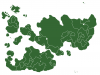
San Remo (Romi: Sanremo, Tikatan: Sant'xa Remarz) is an island country. The country geographically comprises two main landmasses and several smaller islands.

San Remo gained independence from the Kingdom of Tikata in 1814. A new constitution was adopted on 6 January 1815. The western part of Carbalia, the second largest island of San Remo, has been under the de facto control of the breakaway government of Colinestria since 1 September 2013.

Nationally, legislative authority is vested in an elected, unicameral parliament, while executive political power is exercised by the cabinet, led by the Prime Minister, who is currently Juan García Aragón. King Michael II is the country's head of state and is represented by a Governor-General. In addition, San Remo is organised into 15 regional councils and 67 provinces for local government purposes. San Remo is a member of the Commonwealth of Nations.

MediaWiki spam blocked by CleanTalk.